Blog

Posts tagged Performing
In Six!

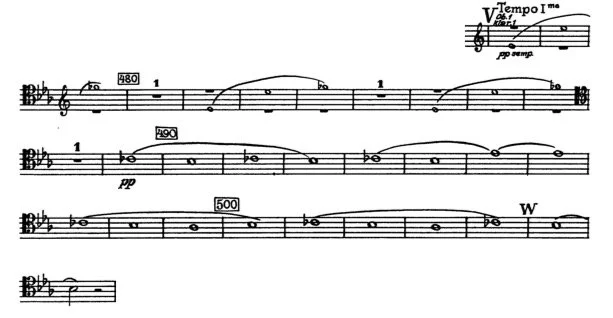
Last fall we played a concert with our Principal Guest Conductor, Henrik Schaefer, which ended with Bruckner’s Symphony No. 4. I find this symphony to be thrilling to perform. Schaefer — a conducter I very much enjoy playing for — gave the orchestra a serious challenge, doing the ending in a measured, unhurried six.

I always pass on to students the same advice that I was given: practice the extremes. You have to, as best as you can, prepare for anything that might come your way. Even then, you might be surprised when you finally perform a piece with the full ensemble and you’re asked to do something that pushes you to your limits. In the context of this quiet and deliberate ending, that meant playing extremely soft, long lines underneath the horn melody.

This is one of those works that easily awakens emotions in me. So, from the standpoint of performing this difficult passage under pressure while incorporating concepts from ISTDP, I had no problem tapping into intense feelings. Once I let the emotions rise up within me, I was inoculated against any anxiety interfering. It’s magical to experience this, to feel deeply connected to colleagues, the audience, and the music itself.

SøSO Bruckner 4 soft ending
A Personal Accomplishment

There are some passages in the orchestral repertoire that are universally considered difficult: the Brahms 1st Symphony chorale, the solos from Bolero or Mahler 3, etc. But then, for whatever reason, there are also those passages that hit individual players on their personal weaknesses. Maybe one player might find them challenging, but another might not think they’re a big deal.

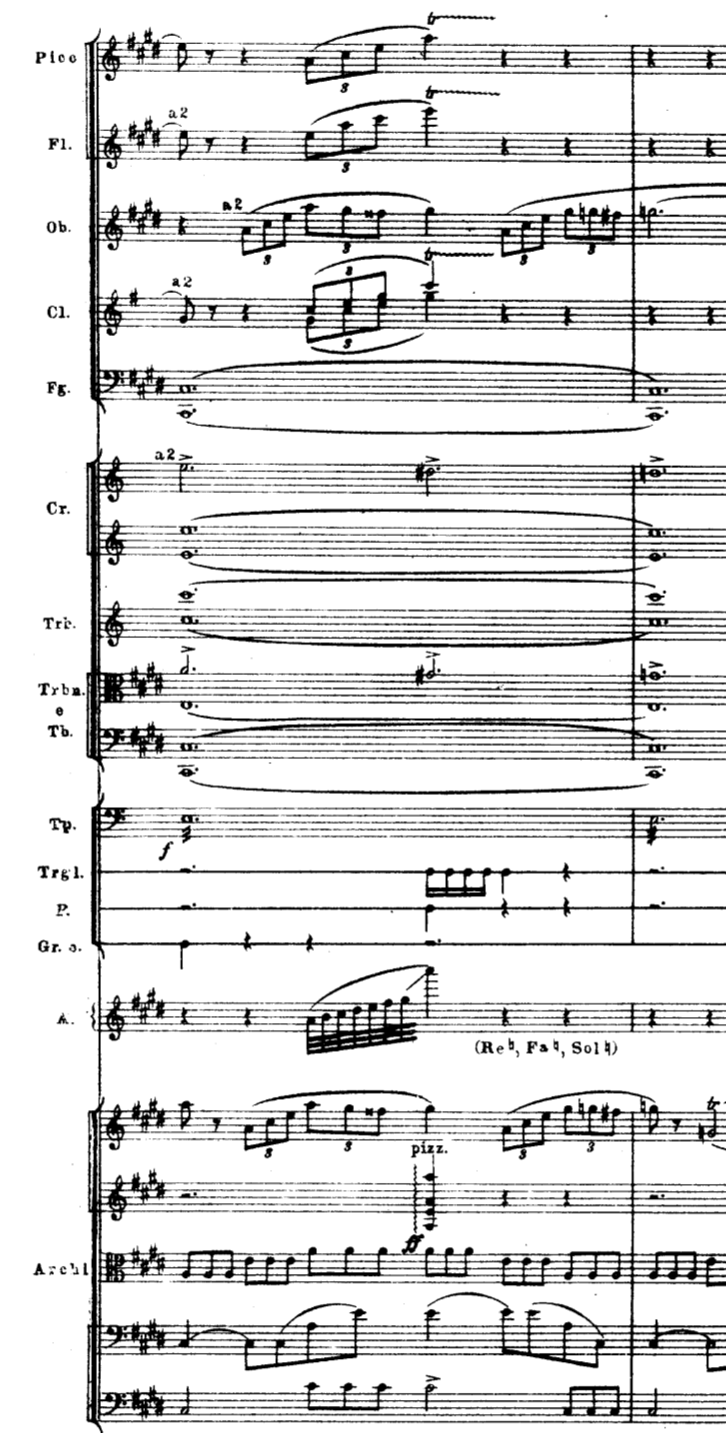
For me, the ending of Scheherazade has been one of those kinds of passages. It’s those first three descending loud notes — A, G-sharp, G — after the loud trombone section bit. To play those with clarity and good sound, and to project over the orchestra in coordination with the horns, has been something that has been extremely challenging to me over the years.

This past January, we played Scheherazade, and I finally got the result I’ve always wanted in this spot. It’s kind of funny, because, in the context of the entire piece, it is overshadowed by many other places, including difficult multiple tonguing and other rhythmic bits. So it’s not like anyone listening to the performance would know that it’s those few notes that were most meaningful to me.

In that way, this was a very personal accomplishment. (You can hear me play this passage at about 00.40 into the recording below.)

Scheherazade_Excerpt
Sønderjyllands Symfoniorkester w_Hans Graf

The boring answer as to how I have improved my ability to perform this passage is patience, trial and error, and slowly gathering pieces of information from people I greatly admire, gradually incorporating them into my playing over a long period of time.

Specific to trombone technique, I’ve come to prioritize what you might call immediate sound. Any kind of hesitation will leave you with a lack of flow of air and an embouchure that prevents the volume and color you need in a passage like this one in Scheherazade. If you’re an Alessi Music Studios subscriber — and I highly recommend you become one if you’re not already — you’ll know Joe Alessi is big on this concept. He’s the source of this particular bit of information.

We’ve had Ian Bousfield in town as a soloist, conductor and/or coach several times since I’ve been with the orchestra, and each time he has come, I‘ve tried to soak up as much of his way of playing as I possibly can. Then, afterwards, I’ve tried to figure out in my own words and concepts what it is that makes his playing so effective. With regard to this Scheherazade passage, it is employing Ian’s focus and efficiency in the high range. To me, it’s like Ian skims the cream off the top of the sound in passages like this, only using that brilliant, projecting part of the sound that can leap out of the bell and into the audience.

The more exciting answer to what I’ve changed is: my mouthpiece and setup, haha. Over the years, I’ve gravitated towards a setup that adds more upper overtones to my sound. I’ve done some tests with an audio spectrum analyzer, and have been led by those results, as well as some conversations with Christian Griego, to choose a lighter-gauge bell, standard slide (no more nickel bass crook), and a mouthpiece that is a bit wider but more shallow. This last concept about mouthpieces is one that Ian encourages too, and I’m using his V3 mouthpiece in the recording, as a matter of fact.

Me trying to improve in my performance of this passage in Scheherazade is a pretty good example of the peculiarity of my life as an orchestral musician. We’re talking about three notes that come twice in a single piece of music, notes that honestly very few people in the audience would even really notice how I play them, in a work that comes around only once every four or five years or so. However, the reality of the existence of these few tones, and the fact that I will surely have to attempt them again, has remained somewhere in the back of my mind. Each time I’ve heard anything that might be relevant to making them sound better has tripped a switch somewhere in my brain that says “perhaps I can use this for those notes in Scheherazade.” Music is famously subjective and there’s always room for improvement, so I won’t be ending my quest here: those switches will continue to trip when something helpful makes itself known to me. However, I can say that I have turned a corner and that the result I got in this passage in January was a personal accomplishment.
Philip BrownISTDP, Audio, Performing
Symphonic Universe

This past January, we played a film music concert, directed by Robert Ziegler, that primarily featured music from superhero films. This was a real career highlight for me! I say that in part because recording soundtracks is one of the things I miss the most from my years freelancing in Seattle, and it was a thrill to get to get back to performing this kind of music. Moreover, as I’ll detail in a moment, there was a personal family connection to some of the music on the program that made it particularly meaningful.

I have to begin by giving credit to my low brass group, which consisted of me, Anna Hjerrild Weitling, Joshua Blows, Samuel Taber, and Pernilla Brown. It was a true pleasure performing with these guys!

The set list consisted mostly of Marvel movies, but I thought I’d share audio clips from two different DC soundtracks, both from Batman movies. (These clips are live from the Alsion performance.) To start, here’s some music from Hans Zimmer’s Dark Knight Rises. One of the reasons I know I am meant to be an orchestral trombone player is that I find unique enjoyment and satisfaction in rehearsing and performing simple block chords with a low brass section. Although I am a sucker for loud octave melodies in a minor key over taiko drums as much as anyone, I find that, looking back on a performance like this, it’s the fine details of the kind of quiet section moments you can hear in the first minute and a half of this clip, that I end up regarding most fondly. I find it super rewarding to be a part of an ensemble-before-self mindset and a team effort. It’s why I’ve often favored ensemble playing over solo playing.

Batman_Zimmer

Next up we have Danny Elfman’s score to the 1989 Tim Burton classic Batman. This was the Batman movie of my youth. I remember seeing that film in the theater, and then sprinting home on my bicycle, inspired by all the themes I had just heard. There was a record store a few blocks from my house, and I found a cassette tape there of Elfman’s original soundtrack. I wore that tape out, going as far as dictating a lot of my favorite sections and writing a little arrangement for piano. My father was kind enough to sit down at the piano with me and play through it, giving me some ideas and encouragement for what I had written. We lost Dad last year, and this memory is one that I really cherish.

I’ll include two sections from the rather lengthy Batman suite we played in January, the first one being a delicate soft bit. One of the. . . challenges, let’s say. . . of playing first trombone is that you occasionally get something high and soft placed awkwardly in a program. So, although I am a big fan of Elfman’s Batman score, I was not really thrilled to see this lick in my part, which I would be asked to execute after a good hour of a mostly loud and aggressive progam:

Since it’s the focus of this website, I would like to describe my mental process in playing this little line, or at least what I was thinking about at the time. As I mentioned, I love the soundtrack, and it goes back to my years growing up in Kentucky. This source material is a pretty deep well to dip into emotionally. So, although the performance made me nervous, I was able to recognize the anxiety as being in striated, and then let myself feel the underlying passion for what I was playing. That sort of inoculated me against any unwanted or misplaced tension. (I come in at about 46 seconds in the clip.)

Batman_Elfman Flowers and Love Theme

I thought that the ending of the Elfman Batman Suite was so satisfying to play that I would post it here. It also provides a chance for me to give a shout out to my brass colleagues in the orchestra, as well as the several very fine extra musicians included in the production. I am so proud of having been a part of that group!

Batman_Elfman Final Confrontation and Finale

This concert was a whole family affair, with my kids, big superhero fans themselves, in attendance. My youngest, Ingvar, came to the concert in Captain America cosplay, and Pernilla and I gave the orchestra permission to use his photo in their press materials. (He looks so serious b/c, like I said, he was in cosplay, answering only to Cap or Steve Rogers that evening.) Having my family there made the concert particularly special, and created a link between me as a boy, bicycling home, thrilled by Elfman’s score, my father, playing through my version for piano, and my kids, finding inspiration in this very same music. Our orchestra really did a great job producing the show, with lights and images, as well as bringing in Danish YouTuber Jørgen Bjørn as emcee. It was defintely one of my favorite weeks I’ve had at work.

Philip BrownISTDP, Audio, Performing